Studying abroad is an exciting opportunity, but managing money in a foreign country can be challenging for students and their parents. From paying for everyday expenses and transportation to buying groceries and managing emergency costs, having convenient access to foreign currency is important.
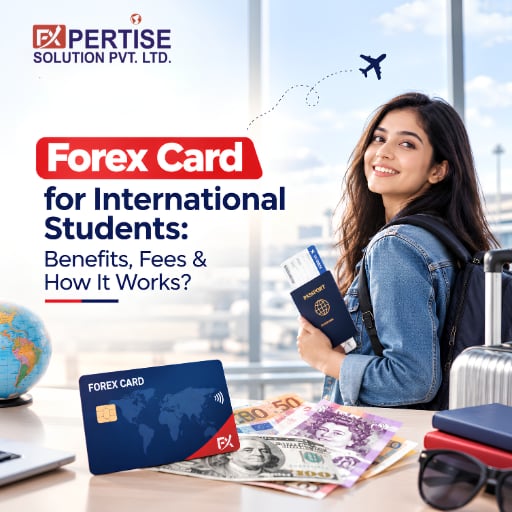
A Forex Card for International Students can be a practical way to carry and access money while studying overseas. Unlike carrying large amounts of cash, a prepaid forex card allows students to load foreign currency onto a card and use it for eligible purchases and withdrawals abroad.
For Indian students planning to study in countries such as the USA, UK, Canada, Australia, Germany or other popular destinations, understanding how forex cards work, their fees and their benefits can help in planning overseas expenses more efficiently.
What Is a Forex Card for International Students?
A Forex Card is a prepaid card designed for international transactions. You can load a supported foreign currency onto the card before travelling and use it abroad for payments or ATM withdrawals, subject to the card provider's terms and applicable limits.
For students, a Prepaid Forex Card for International Students can be used for expenses such as:
- Food and groceries
- Public transportation
- Shopping and daily essentials
- Accommodation-related expenses
- Online international payments
- Emergency expenses
- ATM cash withdrawals
Depending on the card, multiple currencies may also be available on a single card, which can be useful for students travelling through different countries.
Why Do Students Need a Forex Card When Studying Abroad?
The students usually need to make frequent small value transactions on and off at their destination. It's cumbersome to have cash for all expenses and using a single Indian debit or credit card could incur extra international transaction fees.
A Forex Card for Students Going Abroad is another Forex cards solution for travelers and living expenses on their abroad trip.
The card may also be connected with a monetary education program that parents could use in order to provide their children with cash. They can, instead of sending the money regularly, upload the money to the student's bank account as per the probable consumption as per the card-management facilities available.
Related Post: Indian Students Can Pay UK University Fees from India
Forex Card Benefits for International Students
1. Convenient International Payments
Students can use their forex card at eligible merchants abroad wherever the card network is accepted. This can make everyday payments easier without carrying substantial amounts of physical currency.
2. Easier Budget Management
Loading a predetermined amount can help students maintain a travel or monthly spending budget. Students can divide their funds according to accommodation, food, transportation and personal expenses.
3. Reduced Dependence on Cash
A Student Forex Card for International Travel can reduce the need to carry large quantities of foreign currency. Students can keep a smaller amount of cash for situations where cards may not be accepted.
4. Useful for ATM Withdrawals
Forex cards can generally be used at supported ATMs overseas. However, ATM withdrawal fees, limits and exchange-related charges can vary, so students should check the card's terms before using this facility.
5. Added Security
If a physical card is lost or stolen, many providers offer card-blocking and replacement procedures. Students should keep the provider's customer-support details available while travelling.
6. Convenient for Parents
For parents, a forex card can provide a structured way to fund their child's overseas expenses. Depending on the provider, funds may be managed or reloaded remotely, making it easier to support students during their studies.
What Are the Fees for a Forex Card?
The total cost of a forex card depends on the provider, currency, transaction type and applicable terms. Students should look beyond the exchange rate and check the complete fee structure before selecting a card.
Common charges may include:
| Fee Type | What It Means |
|---|---|
| Card Issuance Fee | One-time charge for issuing the card |
| Reload Fee | Charge that may apply when adding more funds |
| ATM Withdrawal Fee | Applicable to certain international ATM withdrawals |
| Cross-Currency Fee | May apply when spending in a currency different from the loaded currency |
| Replacement Fee | May apply if the card is lost or damaged |
| Inactivity/Other Fees | Depends on the card provider and terms |
Important: Fees and limits can change between providers and card variants. Always check the latest pricing, currency support, withdrawal limits and terms before purchasing.
How Does a Forex Card Work?
Using a forex card is relatively straightforward.
Have more questions about forex card?
Everything about using, loading, and reloading a travel forex card.
 Chat on WhatsApp
Step 1: Choose the Currency
First, determine where you are going to study and which currency you are likely to need. For example, a student going to the USA may primarily need USD, while a student going to the UK may require GBP.
Step 2: Apply for the Card
Complete the required application and KYC process with the forex card provider. Students may need documents related to identity, travel and their overseas education, depending on the provider and transaction.
Step 3: Load the Card
Once the card is issued, the required Foreign Currency can be loaded onto it. The amount should ideally be planned according to expected initial expenses and available financial arrangements.
Step 4: Use It Abroad
After reaching the destination, students can use the card for eligible purchases and ATM withdrawals. Keep track of the balance regularly to avoid running out of funds.
Step 5: Reload When Required
If additional funds are needed, the card can generally be reloaded through the available process, subject to applicable regulations, limits and provider requirements.
How to Choose the Best Forex Card for International Students?
There is no single card that suits every student. The right choice depends on the destination, spending pattern and supported currencies.
Before selecting the Best Forex Card for Students Going Abroad, compare:
- Supported currencies
- Exchange rates offered
- Card issuance and reload fees
- ATM withdrawal charges
- Cross-currency charges
- International acceptance
- Online transaction facility
- Reload options
- Customer support availability
- Emergency card replacement options
- Mobile app or card-management features
Students should also check whether the card supports the currency they actually need. A card with a low advertised fee may not necessarily be the most suitable if its currency conversion or withdrawal charges are higher.
Forex Card vs Cash vs International Debit Card
| Feature | Forex Card | Foreign Currency Cash | International Debit Card |
|---|---|---|---|
| Physical cash required | Low | High | Low |
| International payments | Yes, subject to acceptance | Only where cash is accepted | Generally available |
| ATM access | Usually available | Not applicable | Usually available |
| Budget control | High | High | Depends on bank account |
| Security if lost | Can often be blocked | Cannot be blocked | Can generally be blocked |
| Currency conversion | Based on card terms | Already converted | Bank/card network rates may apply |
For many students, using a combination of a forex card, limited emergency cash and another payment method can provide flexibility while studying abroad.
Documents Required for a Student Forex Card
Requirements can vary between providers and transaction types. Indian students may commonly be asked for documents such as:
- PAN card
- Valid passport
- Student visa or relevant travel documentation
- Proof of overseas education/admission
- Other KYC documents as applicable
It is advisable to confirm the current documentation requirements with the forex provider before applying.
Why Consider FXpertise Solutions for Your Forex Card?
For students travelling abroad for higher education, choosing the right forex solution is an important part of financial preparation. FXpertise Solutions provides forex-related services designed to make international money management more convenient for travellers and students.
Whether you are looking for a Forex Card for Overseas Students, foreign currency or other travel-related forex services, you can explore the available options based on your destination and requirements.
Visit FXpertise Solutions to explore forex card and currency exchange services for international travel.
Final Thoughts
Financial management is a key aspect of preparing for study abroad. A Forex Card for International Students can be a convenient alternative to obtaining foreign currency, making eligible payments and settling the day-to-day expenses abroad.
Students and parents should check out the exchange rates, fees, currencies, withdrawal charge, reload options and security measures before selecting a card. Having a forex card along with some emergency money and an additional payment option can also give additional flexibility in the study abroad trip.
FAQ: Forex Card for International Students
1. Is a forex card useful for students studying abroad?
Yes. A forex card can be useful for managing eligible international payments and ATM withdrawals while studying overseas. It can also help students manage their spending without carrying large amounts of cash.
2. Can parents reload a student's forex card?
Reload options depend on the card provider and applicable rules. Students and parents should check the provider's current reload process and documentation requirements.
3. Is a forex card better than carrying cash?
A forex card can offer greater convenience for card-based payments and can reduce the need to carry large amounts of cash. However, keeping some local currency for emergencies is still advisable.
4. Can students withdraw cash using a forex card?
Generally, yes, at supported international ATMs. Applicable ATM withdrawal fees, limits and other charges depend on the card and provider.
5. Which is the best forex card for students going abroad?
The appropriate card depends on the student's destination, required currency, expected spending, ATM usage and fee structure. Students should compare these factors rather than selecting a card based on one feature alone.